Sunday, August 6, 2023

Internet Crisis at Agri Intex 2023 Hampers Cropfit's Vision for Farmers


Thalavady Farmers Foundation recently had the opportunity to exhibit the revolutionary Cropfit mobile application at Agri Intex 2023, held at the prestigious CODISSIA trade exhibition center in Coimbatore. As a young foundation, we were ambitious to connect small and marginal farmers to a wider market through our ground-breaking app, which had been launched just a month and a half prior to the event. However, our dreams were marred by a severe internet crisis that impacted the success of Agri Intex and thwarted our efforts to empower farmers through Cropfit mobile App.

                                   
The Anticipation and the Setback:

With over 1,50,000 visitors expected at Agri Intex, we saw this as the perfect opportunity to introduce Cropfit to farmers and traders who could greatly benefit from its services. Excited and prepared, we were allotted Stall No. 149 in G Hall. To assist us in this endeavor, we were fortunate to have student volunteers from the social work departments of Hindustan College, Coimbatore, and Syed Ammal Engineering College, Ramanathapuram. With their support, we looked forward to providing farmers with live demonstrations of the Cropfit mobile app and facilitating its downloads.
The Unforeseen Internet Crisis:

However, what we encountered was a rude shock. The internet facility at Agri Intex was virtually down, and major telecom networks like Jio and Airtel were also failing to provide stable connectivity. As attendees started to gather at the event, we struggled to help farmers and traders download our app and experience its potential firsthand. Despite our efforts to display QR codes for easy access, the lack of reliable internet made the process cumbersome, leaving many farmers waiting in frustration.
                                                                             
The Plea to CODISSIA and the Disheartening Response:

Prior to the event, we had informed CODISSIA about our intention to showcase Cropfit and the need for reliable internet connectivity. Regrettably, we were not advised about the possible internet issues, leaving us unprepared for the crisis that unfolded. Had we been properly informed, we would have arranged separate internet routers through private service providers. To address our concerns, we even wrote an email to the Chairman of CODISSIA, seeking assistance, but received no response.
The Devastating Impact on Cropfit's Vision:

The primary purpose of our presence at Agri Intex was to bridge the gap between farmers and markets through Cropfit, enabling easy access to resources and buyers. However, due to the non-availability of internet service during crucial hours, we could not extend the much-needed help to the farmers. As a result, the potential user base for Cropfit remained untapped, leading to lost opportunities and thwarting our mission to empower farmers digitally.

Challenges for Digital India
                                          : 
This unfortunate incident also sheds light on the broader challenges faced by Digital India initiatives. Seamless internet connectivity is the backbone of any digital platform, and without it, the vision of a digitally empowered nation becomes unattainable. The lack of reliable internet at a prominent trade exhibition center, supported by esteemed institutions and companies, including the state and central governments, raises questions about the preparedness and accountability of the stakeholders involved.


Disappointment and Frustration.

Our experience at Agri Intex 2023 was one of disappointment and frustration, as the non-availability of internet service hindered our efforts to introduce Cropfit to farmers and traders. We sincerely hope that such incidents serve as a wake-up call for event organizers, telecommunication companies, and other stakeholders to prioritize seamless internet connectivity at all digital-centric events.
While the setback at Agri Intex was disheartening, we remain committed to the vision of Cropfit - to revolutionize the lives of small and marginal farmers. We will continue to strive towards empowering farmers through our mobile application, and we hope that future opportunities will allow us to fulfill our mission with the support of a robust and reliable internet infrastructure.

Kannaiyan Subramaniam
Lakshmi Udayal
Co founders,
Thalavady Farmers Foundation.
+91 9444989543
+918940156255

Tuesday, January 1, 2019

Super bugs – a crime against humanity by Pharma companies.

Kannaiyan Subramaniam

I am not a medical doctor or a veterinarian, I am a farmer. When I was young boy, growing up in rural Tamil Nadu in the late 70’s, my uncle started a poultry farm with 200 birds. Before this, I never knew that poultry could be produced in an intensive, so called ‘modern’ way. 

There were so many birds in one shed, they got concentrated feed, modern medical treatment when the birds fell sick. I was also surprised to see that there were dedicated veterinary doctors who would come to inject the birds. This was during the early stages of the white revolution in India- when India more than doubled its milk production. Poultry production also started to become more popular- many poultry farms and broiler chicken farms came up all over the country. Today, India has become a huge producer and consumer of chicken and eggs.
 
Photo courtesy: Rahul.M
But this taste for chicken has led to a serious public health problem. The rampant use of antibiotics given to birds is having a spillover effect for humans. Many of the bacteria strains that cause common infections and diseases like tuberculosis or pneumonia are increasingly becoming resistant to these drugs because of prolonged exposure and natural selection. They are turning into super bugs, the drugs simply become ineffective against them, leading to antimicrobial resistance.  Around the world, approximately 700,000 people die due to anti biotic resistance. Agriculture, particularly intensive animal/poultry farming has been identified as a major culprit. 

Antibiotics are not only used to prevent sickness in birds, but broiler chickens are also fattened by feeding them. Antibiotics help to increase the conversion ratio of feed intake in to flesh. In normal circumstances, only sick animals and birds should be treated with anti-biotics, but todays multibillion dollar pharma industry discovered that boosting the use of antibiotics on healthy animals will maximize their profit. They initiated the criminal practice of promoting antibiotics on healthy animals all over the world.

Many of this anti-biotics are last hope medicines in human health. For example, Colistin is an antibiotic which is used for treating infections such as tuberculosis, pneumonia etc. The antibiotic Colistin is being used in hundreds of tones by poultry farms to fatten chickens. On the other hand, people are increasingly eating chicken grown with anti-biotics. 

The waste generated by these farms is also contaminating our water and food sources with superbugs and antibiotics. Thousands of chicken stalls across the country dispose chicken waste like skin, feathers and legs in water bodies and in open fields. 

Recently a research conducted by a group of researchers from Christian medical college, Vellore and Apollo cancer hospital, Chennai, has found out that the raw vegetable samples lifted from 22 locations in Chennai city between October and November 2017; 46.4% of the samples were found to harbour bacterias highly resistant to anti biotic drug Colistin. It is believed that the contamination in fruits and vegetable is a spillover from the poultry industry through poultry litter being used as manure in agriculture, this needs to be studied further.

Approximately there are around 100,000 veterinarians in India and most of them work for pharma companies.  They don’t advise farmers to reduce antibiotic use, but to the contrary, act as promoters. The intensive contract poultry farming system has a close nexus with pharma companies. Such antibiotics can be easily purchased over the counter in India without a prescription, in most cases contract farms are directly getting the drugs through the contract farming system.

I met a top official of a global Pharma giant in Rome recently, he was of the opinion that those antibiotics that are necessary to treat humans could be banned. But, it is impossible to promote any judicial use of antibiotics in India due to the absence of independent veterinarians and a lack of any control on waste disposal.

I was recently a farmer panelist in a high-level side event on anti-microbial resistance in livestock organized by the UN Food and Agriculture Organisation (FAO), World Health Organisation(WHO) and world organisation for animal health (OIE) at the FAO headquarters in Rome. Pharma companies at the event argued that they don’t claim in their labels that the drug is for growth promotion, thus blaming farmers. I responded to them that in India, companies openly promote these drugs as growth promoters. 

There was also serious argument when they claimed that antibiotics function as prophylactics, that is disease preventers, when given to healthy animals. They argued hard that there is no proof that use in healthy animals as growth promoters is directly connected to anti-microbial resistance. 

The European union has already banned anti-biotic use as growth promoters. Companies are voluntarily stopping in the United States. The World health Organisation(WHO) has issued guidelines not to use antibiotics in healthy animals and as growth promoters. But, greedy pharma companies inhumanly sell these risky drugs to India and other developing countries. 

Zoetis, a former subsidiary of Pifzer, a world’s biggest animal drug company sells antibiotics in India despite the risk of antimicrobial resistance, whereas they have different standard to United States. Is this not a crime against humanity?

National or international guidelines will not work on transnational corporations, they need to be regulated by stringent legislations and regulations. A binding international treaty on TNCs to make them accountable is the need of the hour. 

The government of India and world governments should immediately ban all antibiotics used as growth promoters in livestock and should bring in appropriate legislation and regulatory mechanism to control misuse of the drugs in general and make the pharma companies responsible.

The intensive, industry led livestock system where livestock can’t be grown without antibiotics is a faulty model and pharma companies are a part of the model.

People led and biodiversity based agro ecological livestock keeping should be supported by national governments and UN agencies.  Research and use of viable alternative medicine for animals must also be supported. 

Useful links for further reading.


Tuesday, November 13, 2018

Soligar Doddi

Struggles of adivasi youth from Soligar Doddi- an appeal for support

S Kannaiyan

Soligar doddi is a tiny and remote adivasi hamlet in the Thalavady block of Erode district in Tamil Nadu. It is adjacent to the Western Ghats in the Thalamalai forest range in the Sathyamangalam Tiger Reserve. About 42 families live in this hamlet. They have traditionally depended on faming, livestock keeping and collecting minor forest produce for a living. Most of the families are landless and men and women work in nearby fields as agricultural laborers. About ten young boys work in a spinning mill in Gobichettipalayam, a small town in Erode district. Elderly people take care of livestock- mainly cows, sheep and goats. Almost all the houses in this hamlet were built many decades ago and are in grave need of repairs. More than 15 families live in makeshift thatched huts without much protection.

Conflict stricken Adivasis suffer during Veerappan’s reign 

In 1990s, the famous forest brigand Veerappan operated from the forest area near Soligar doddi. He was involved in sandalwood smuggling and poaching, and he killed many police and forest officials. He was wanted by the police and for many years there were skirmishes between Veerappan’s group and the police. Unfortunately, the innocent people of Soligar Doddi were caught in the crossfire that lasted over a decade. Police arrested 14 people from Soligar Doddi and almost all the villagers were interrogated and subjected to brutality. Seven of them spent 7 years in jail, 5 years as under trials and were later sentenced to life imprisonment. They were later released by the Madras high court in 2004. These poor people, who spent years of their lives in court cases, were subject to frequent police raids, violence, they lost their livelihood and suffered immensely. 
Children of Soligar Doddi
Mahadevan who spent 7 years in Jail  
Meena, the first Graduate of the village with children


Mahadevan and his Family. Roja, the eldest daughter is studying MA.Economics.
Veerappan was killed by a special police task force in October 2004 and finally peace returned to this hamlet. But, the damage caused to their life is irrevocable and gravely impacted the younger generation. In the meantime, the reserve forest which has been their home for centuries was declared a Tiger Reserve, a highly protected area, which severely restricted Adivasi’s access to the forest. The forest, traditionally their territory, and a key source of their livelihood, was lost to the people of Soligar Doddi. Today, they struggle to make ends meet, mostly working as wage laborers. 

A Success Story of children’s 
education.

Sobha,Revathy, Sundhary and Vennila. All of them in the colleges.
In the Year 2000, no child from Soligar Doddi was in school. This was when St.Ann’s convent, a Primary School from the nearby Thiginare Village took an initiative to provide health care and enroll children in their school. A first batch of children started going to school in 2001. One of them was Meena, a little girl, whose grandfather covered the 3km distance to school, bare feet, carrying her on his shoulders every day. A few years later, he was trampled to death by an elephant. Her two younger sisters Vennila and Sundhari also joined school eventually, walking to school together. All the girls did well. Today, Meena is doing her M.Phil in Physics. Vennila studies Masters in Economics and Sundhari studies Bachelor in Botany.

Another villager, Mahadevan was arrested by police when his daughter Roja was 3 months old and spent more than 7 years in Jail.  Roja too went to St.Ann’s and is doing a Masters in Economics today. Similarly, many other such tribal children from Soligar Doddi have done well at school, while their parents struggled, many of them languishing in jail as a result of the past years of conflict. 

A School finally comes to Soligar Doddi

After several years, in 2016, a government primary school was started in the village through efforts of Mr. Sundharam, then Member of the State legislative assembly. 

Currently 18 students are studying in the school, while 13 others are going to St. Ann’s in the nearby area. The sisters from St Anns convent have personally supported the scholarships of many of the bright students to go to better universities in the state. 


Challenges to stay in the school system.

Only two boys had completed pre-university and managed to join higher studies but were forced to discontinue due to poverty and financial crisis at home. Most of the boys who dropped out from 7, 8 and 9thstandard have ended up as child labour in farmlands. The reasons for the drop out included corporal punishments at school, rigorous pressure to do well in coursework and a general sense of demotivation. Many of the youth had become addicted to liquor. The conventional school system is also not very suitable for such youth and that more suitable courses are needed, taking into account their Adivasi identity, and vocational training such as bee keeping, livestock keeping, tribal housing skills etc... may be explored in consultation with them.

Santhosh, a 9thstandard drop out, who is a wonderful artist, is trying hard to reappear for the Secondary School Leaving Certificate (commonly referred to as SSLC) exam. He wants to complete the exam but finds it hard to pass. Some of those who managed to pass SSLC are still working in the fields as labourers.

A girl who has completed her pre-university course failed in one of the papers, and now is struggling to take night classes to finish. She is looking for some vocational skills to be able to earn a livelihood.

Three youths appeared for police selection but were not selected. Six young persons were selected in the forest department as anti-poaching watchers but all of them left due to problems in the department including non-payment of the wages in time.

The children and youth of this hamlet need special attention from the government and the society as these adivasi families live in very precarious situations. Their human rights have been consistently violated and neglected for decades. 

I appeal to the public and interested friends to explore the following possibilities.

·      A socio-economic study of the hamlet through participatory method with an aim to understand and identify most suitable bottom up development strategies for the inhabitants of Soligar Doddi. 
·      The government, the elite and privileged, the corporates and NGOs can do their part in bringing justice to not only this little hamlet, but also many such tribal hamlets by reaching and understanding them.
·      Career guidance and decent employment opportunities can be offered by interested individuals and organisations.
·      NGOs can extend their helping hand in rebuilding the lives of the people of this village
·      Corporates can direct their CSR towards this village, especially in implementing a housing program.

Some ongoing financial support for education

Jeevanand, an activist based in Chennai has mobilised some funds from friends and has so far helped five girls for their studies. Individuals and CSR funds are welcome to educate the children of the Soligar Doddi.
Arulagam[1], an environmental NGO based in Coimbatore is facilitating the effort by collecting funds for childrens education.

Tamil Nadu Pazhangudi Makkal Sangam, an association of tribal people of Tamil Nadu is an integeral part of the life of the Soligar Doddi people. Leaders associated with this organization, such as V..P.Gunasekharan; Mohan Kumar; veteran human rights lawyer B.P.Mohan; and ex MLA Sundharam remembered by the entire village for their tireless legal struggles to support the community members. The villagers are also grateful to the sisters of St.Ann’s convent and most particularly Sr.Jeba Malai, Sr.Angel Mary, Sr.Leema for their sustained support for the village.


[1]http://www.arulagam.org

Tuesday, September 25, 2018

RCEP will be disastrous for Indian dairy farmers and agriculture

Kannaiyan Subramaniam, the General Secretary of South Indian Coordination
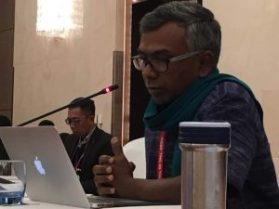
Committee of Farmers movements (SICCFM), a member of La Via Campesina South Asia, intervened during the 23rd RCEP negotiations held in BANGKOK on 23 July,2018. WhatsApp-Image-2018-07-23-at-17.32.12-300x225
Here is the full text of his speech:
Vanakkam Honourable Chair and negotiators from 16 RCEP countries,
My name is Kannaiyan Subramaniam, I’m a small farmer from Tamil Nadu, India and representative of La Via Campesina, an international peasant movement with members in 81 countries, 182 farmers Unions comprising of over 200 million of small scale farmers families including agricultural workers and indigenous people.
I come from India where farmers are suffering due to crashing prices, import surges, land grabs, ever increasing cost of production and import driven crop pattern changes that put farmers in deeper and deeper crisis. As a result, more than 300,000 farmers have committed suicide after India committed to WTO policies of free trade.
As time is very limited, I will give few examples from my country on behalf of the farmers’ union.
Among the several million small and backyard dairy farmers producing milk in India, 95% are women. This is a mass production by the masses not by few big corporations. The income generated from dairy, is predominantly spent by women for welfare of the family. My own education is the result of hard work put in by my mother, who reared buffalo and cows. We have an impressive network of cooperatives, domestic private players, individual milk sellers, who together with the farmers made the country self-sufficient on milk. This is an excellent model that should be replicated in other developing countries.
But, RCEP is expecting member countries to slash the tariff to zero including for dairy. If India commits in RCEP that will bring disaster. RCEP will probably wipe out the small and backyard dairy farmers, and that will be nothing short of a suicidal step for a country that is self-sufficient. I’m not being an alarmist here, but I’m expressing our anguish based on our country’s experience in the case of edible oil and pulses.
Two decades ago, we started importing edible oil in very a small quantity, but now India is depending more than 70% of edible oil from the imports coming predominantly from the countries like Indonesia and Malaysia. As the results farmers who produce edible oil are forced to be out of the production. Similar cases with pulses – in 2013 it was 38% and now it is more than 52% of what we import from RCEP member countries such as Myanmar and also Canada.
I would also like to highlight how in the middle of climate crisis that we are facing today, farmers need more diversity in our fields. And we can’t do that if RCEP prohibit our knowledge and ability to breed, save and exchange our seeds freely. India is not a member of UPOV 1991, We have our own Protection of Plant Varieties and Farmers Right Act, 2001 that protects our own-farmers seeds. Under this Act farmers are entitled to save, use, sow, re-sow, exchange or sell their seed. Our public sector breeders and universities also produce high-quality and affordable seeds for the farmers.
Compelling the negotiating countries to be members of UPOV 1991 is an assault to biodiversity. It only gives more profit to seed companies, further burdening us farmers with higher costs of production, as our rights to keep, exchange and breed seeds for the next season are restricted or banned. This could further aggravate farmers’ debt due to high price we have to pay for seeds, and in India this could mean the death of farmers.
The governments have done mistake in trade negotiations, for example in WTO we have agreed to Agreement of agriculture (AoA) so that developed countries will reduce their subsidies and farmers in developing countries will benefit. But that never happened; import surges increased and deepened the crisis in country side, resulting in farmers’ suicide.
I would like to caution the negotiators particularly negotiators from India, Thailand, South Korea and other RCEP countries not to repeat these mistakes by continuing with this trade negotiation. At least in WTO, the text was open for the public but here you are negotiating secretly which is against the fundamental principles of democracy and undermining our life. The commitment in RCEP will eliminate the policy space for governments to protect their farmers. Governments will lose their sovereign rights and we, farmers will lose our food sovereignty. So, I very humbly request all of you of 16 governments to discontinue this free trade negotiation and build the trade based on cooperation.

I deleted all my published posts from 2009 by mistake and retrieved most of them and reposted again.

S.Kannaiyan
25th, September,2018.

Hello all,
I have not posted anything for a long time.
I thought of restarting and make my blog active again but, unfortunately, i have deleted all my published postings by mistake today.
I tried to retrieve most of the postings since 2009 through cached in the internet and reposted most of my posting between 2009 and 2014.
I plan to write regularly and keep posting here.

Florestan Fernandes National School of MST, Brazil.

S.Kannaiyan

09.04.2014.
Hello friends,

It's been a hectic last few months with a lot of national and international travel and many protests. Our system doesn't allow us to peacefully farm our lands. Hence the delay in blogging. Today I present to you a very exciting concept called the Movimento dos Trabalhadores Rurais Sem Terra (MST). I had the good fortune to visit this unique School when I was in Brazil. Here is a brief write up on the same.


Brazil’s Landless Workers Movement, Movimento dos Trabalhadores Rurais Sem Terra (MST) has started a national school named after Florestan Fernandes who was leader and intellectual of working class in Brazil and movements across south America. Paulo, one of the Political coordinators of the School explained more about the MST school. “MST school is the national school for its cadres. There are centers at provincial levels in Brazil. MST school in Sao Paulo has the required essential facilities, and there are plans to have schools in other places too. They have schools in Brasilia, Ciarea, Para (Near Amazon). Currently there are 30 formation Schools for MST.” 

In 1996, the MST decided to build the school and took three years to establish it. Many well-known personalities have understood the significance of this Movement and support it. 
Sebastian Salgado, the world famous photographer who made stunning photographs of MST’s fights and people’s life and gave the rights of his publications to MST as a source of revenue to build the school.
Chico Buaque, a very popular singer of Brazil also gave the rights of his songs to MST.
Jose Saramago, a noted writer also gave his rights of his books to MST to build their school. 
The school was constructed with hard work of the brigades who came from all over Brazil. Architects and engineers have volunteered and designed the school and helped in the construction, with the school being inaugurated in 2005. The school has a good library stocked with books on different subjects and nice class rooms, meeting halls, well-maintained hostels and residential buildings, kitchens and dining halls. There is also a computer room with internet connections for students. The school area is Wi-Fi enabled. Every day in the morning students express innovative ideas and host flags of MST and La Via Campesina in the school.


 So what they do in the MST school? They give political training on a variety of subjects. Some of them are:
1)   Political theory. Four national courses lasting 40 days each every year, with two of these courses devoted to train the future leaders of MST
2)   A course for leaders from social movements, conducted in three phases with each phase running 45 days
3)   An intensive course on systematic reading of Karl Marx in six phases, each phase being of 1 week duration
4)   A course similar to reading of Karl Marx but to study Florestan Fernandes who has written 60 books of classical political thoughts. This course is to prepare students to read his works.
5)   Latin American Studies is an international course. La Via Campesina - CLOCK (Latin American Coordination of Social Movements) and La Via Campesina ALBA- Net work of social movements in Latin America send their students for this course. There are three courses offered to these students under Latin American Studies. 
i.                Training of Trainers course for political training. This is a 40 days course and by the end of the course students have to present a program for their movement. Around 60 students from the 16 countries are participating in this course.
ii.              Latin American Political Theory is the longest course of the school of 3 months duration.
iii.            Specialisation in Latin American Studies. This course is being conducted in partnership with the federal university of Juiz De Fora. This is a 2 year course conducted in 5 phases; the subjects of the course include philosophy, politics, economy, agrarian questions and organisational theories. One phase of the course is conducted in the national school in Sao paulo and the rest in the university.

Formal courses: MST national school in partnership with many universities conducts formal graduation and post graduation courses. Seven formal courses are coordinated with Federal University of Brasilia, Federal Rio de Janeiro University, University of Sao Paulo (USP) and UNESP, the state university of Sao Paulo and UFSC (Federal University of Santa Catarina). Graduation courses including art, drama and poetry pertaining to rural areas and post graduation courses in agro ecology and education, Masters courses (similar to M.Phil courses in India) in health and education and Marxism etc. are conducted.


Seminars, debates and meetings: People visit the MST school to attend seminars in various subjects. At least eight seminars are conducted every year on different topics including Latin American Studies. Apart from seminars, there are cycles of debates conducted every Saturday. The debates are open to all. Meetings on different subjects and new issues are also organised regularly in the school. Around 4100 people in 2012 and 3500 people in 2013 were benefited from the school by studying and participating in different programs. 

The MST school is an idea of construction built during the process of the movement. All the volunteers stay in the school for a specific time of two to four years, do collective work with division of responsibilities. During the time my visit, Paula Djacira and Erivan were the political coordinators of the school and were collaborating with other friends and within the larger MST movement. The MST school does not get any support from the government and does not pay anybody. Teachers volunteer and students study and work in the school. Some food is grown in the campus with the rest supplied from various states of Brazil from MST. 


Paulo’s parting shot to me was that he hoped what was happening in the school would set the stage for the future of society. Indian peasants movements have no such school to systematically educate its cadres and leaders. I felt impressed by the equal participation of young women and men in the all the activities of the school from class room to kitchen. Another impressing thing which I felt in the school was that the schools contribution to Latin American studies which strengthens the (America Luccha) American struggle which demonstrated the collective struggle of Latin American people which is something not there in Asia needs to be explored.

Left to Their Fate: A Tribal Farmer’s Ordeal with Wildlife and Bureaucracy

 Kannaiyan Subramaniam,  President,  Thalavady Farmers Association On the morning of  13 December 2025 , I received the distressing news tha...